

A family road trip works when the driving plan includes the parts that are easy to underestimate: loading, bathrooms, meals, traffic, child-seat checks, and the stop that takes longer than expected. Build the route around a small number of useful blocks, not an ideal arrival time that assumes everyone stays cheerful and every road stays clear.
For a family road trip, decide how far the adults can comfortably drive, what the children need during the day, and where you can safely pause. Then choose an overnight stop and a backup route before adding sightseeing detours.
Turn the route into manageable blocks
| Block | Plan | Keep flexible |
|---|---|---|
| Before leaving | Seat fit, fuel, food, route, and first stop | Departure time and loading time |
| Morning drive | One route section with a known rest option | Stop duration and traffic |
| Midday pause | Meal, bathroom, and movement break | Nap timing and weather |
| Afternoon | Shorter drive toward the overnight base | Early arrival or an extra stop |
The table is a starting point, not a schedule to force. A baby’s feeding rhythm, a preschooler’s rest, and a school-age child’s need to move are different. Keep a stop list that includes bathrooms, fuel, food, and a safe place to stretch. If the first drive block runs late, reduce the sightseeing plan rather than trying to make up time by rushing.
Prepare the car and child restraints
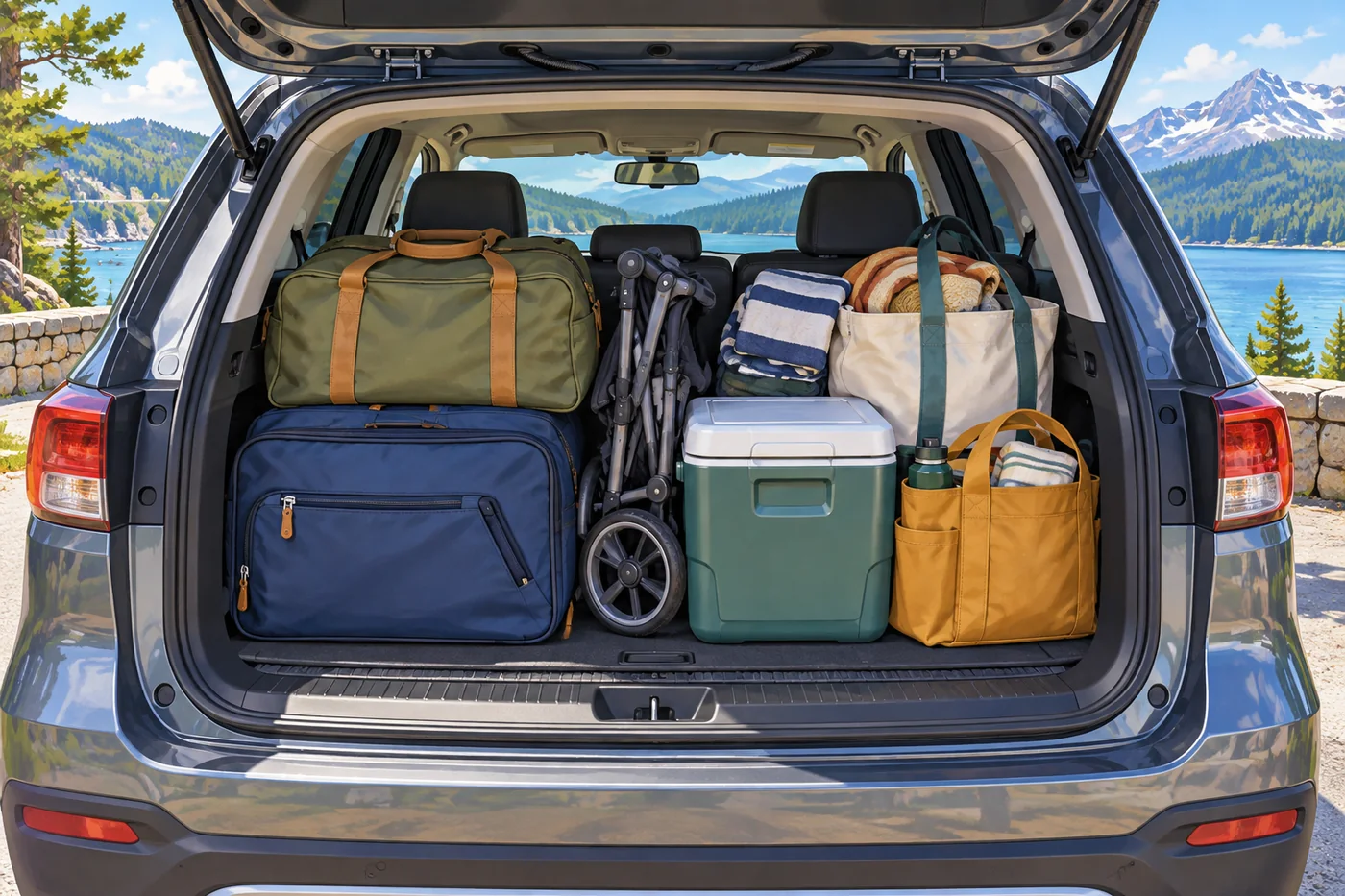
Before departure, check tires, lights, fluids, and any vehicle alerts. Place luggage so it cannot shift into the passenger space. Set navigation and audio before moving, and keep the driver’s attention on the road.
Use a child restraint that fits the child and vehicle, following both the car-seat maker’s instructions and the vehicle manual. NHTSA advises selecting by a child’s age and size, using the seat within its height and weight limits, and keeping children in the rear seat through at least age 12. If you are borrowing a vehicle, install and check the seat before the travel day whenever possible.
Plan stops that solve a real need
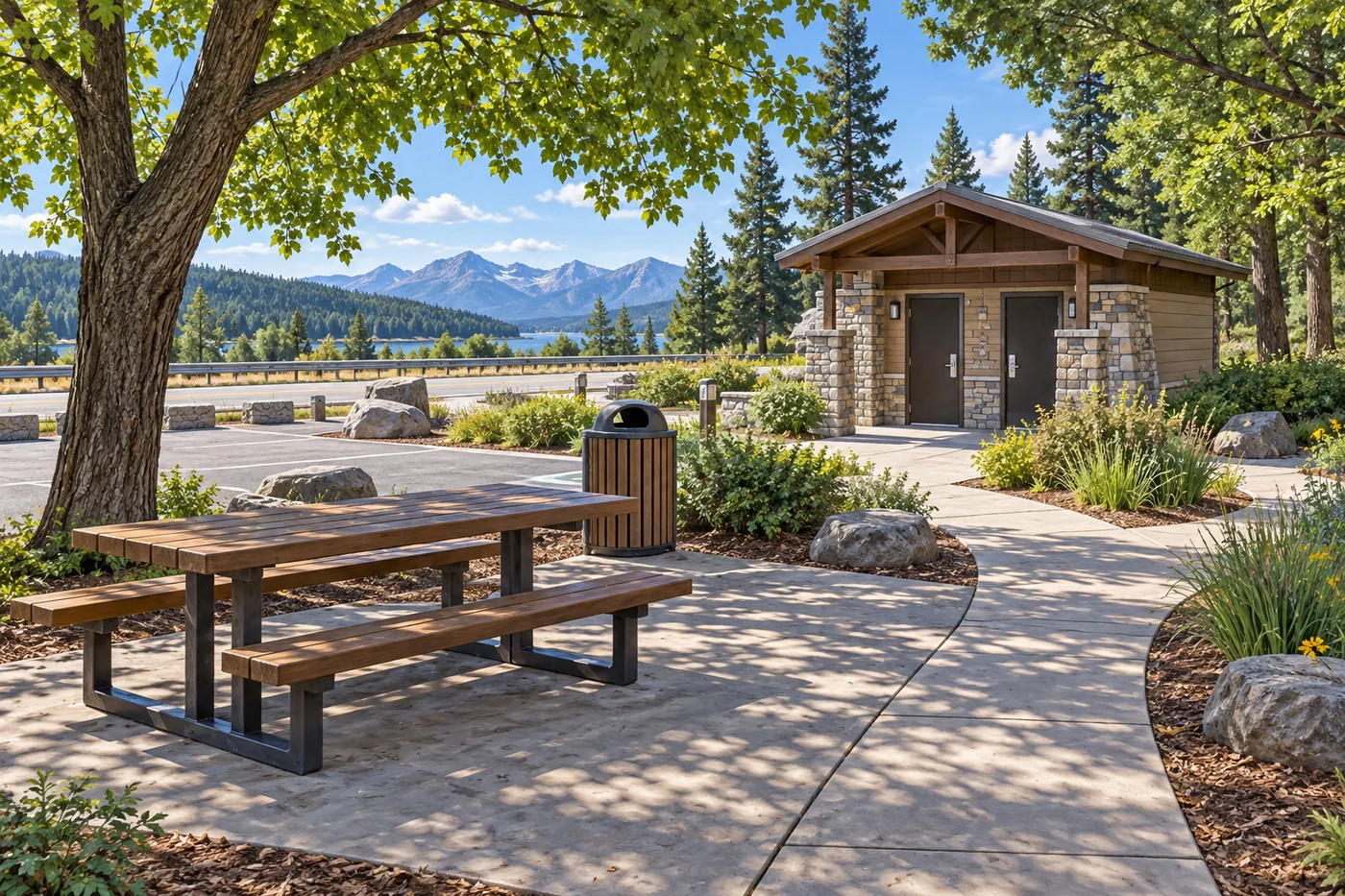
A stop is more useful when it handles at least two needs: bathroom and food, movement and a snack, or fuel and a driver break. Check the route for facilities before the children are urgent. In rural areas, services may be farther apart than expected; in cities, traffic and parking can stretch a short detour.
For naps, follow the child’s normal cues when the route allows it, but don’t make safe driving depend on a child staying asleep. If the driver is tired, switch drivers at a safe place, pause, or stop for the night. A child’s nap is never a substitute for an alert driver.
For a day with an outdoor destination, verify park alerts, conditions, and food-storage rules before packing. The NPS’s camping-before-the-trip advice and during-your-stay guidance explain why those checks vary by site. National parks and campgrounds can have specific rules that differ by location.
Pack for the next stop
Keep a small “next few hours” bag within an adult’s reach. Include documents, wipes, a change of clothes for each child, water and snacks, a comfort item, device chargers, and any care supplies needed on the route. Pack overnight items separately so you do not have to unpack the whole vehicle at a one-night stop.
For shared packing, give each child a small choice between two practical items. Store small toys or activities in a way the passenger can hand them over without turning around or reaching into the driver area. Keep loose objects secured.
Set a road-trip budget with a buffer
Estimate fuel, tolls, parking, lodging, meals, snacks, activities, and any child-seat rental. Use current prices for your dates and route. If a campsite or attraction is part of the trip, check whether it needs an advance reservation and review its refund or change terms.
A useful comparison includes the stop itself and the extra time or mileage to reach it. A “free” detour can still add fuel, parking, and a longer day. Set an amount for flexible meals and an amount for unexpected lodging or transport changes rather than spending the full budget before departure.
What to do when the plan slips
If traffic, weather, or fatigue changes the route, stop somewhere safe and decide which part of the day can be removed. Tell children the next confirmed step and when you will update them. Contact lodging or an operator through its official channel if arrival or booking time may change, and save the confirmation.
A road trip can still feel like a vacation when you reach the base with energy left. Use how to travel with kids for the broader mode-by-mode planning workflow, and how to plan a family vacation for the booking sequence.
Frequently asked questions
How long should a family road trip drive each day?
There is no single daily limit that fits every family. Set a drive target around the child’s age, sleep, route, weather, and adult driving capacity, then leave room for stops and delays.
How often should you stop on a road trip with kids?
Use stops for bathroom, food, movement, and driver rest, adjusting to the children and road conditions. Do not push through fatigue to meet a rigid schedule.
How do I plan a road trip with a toddler?
Keep the day predictable, protect normal rest where possible, pack essentials within reach, and select a safe stop before the child is already distressed.
What should I pack for a family road trip?
Keep documents, snacks, water, wipes, a change of clothes, chargers, comfort items, and child-restraint instructions accessible. Pack the rest by stop or overnight rather than by item.