
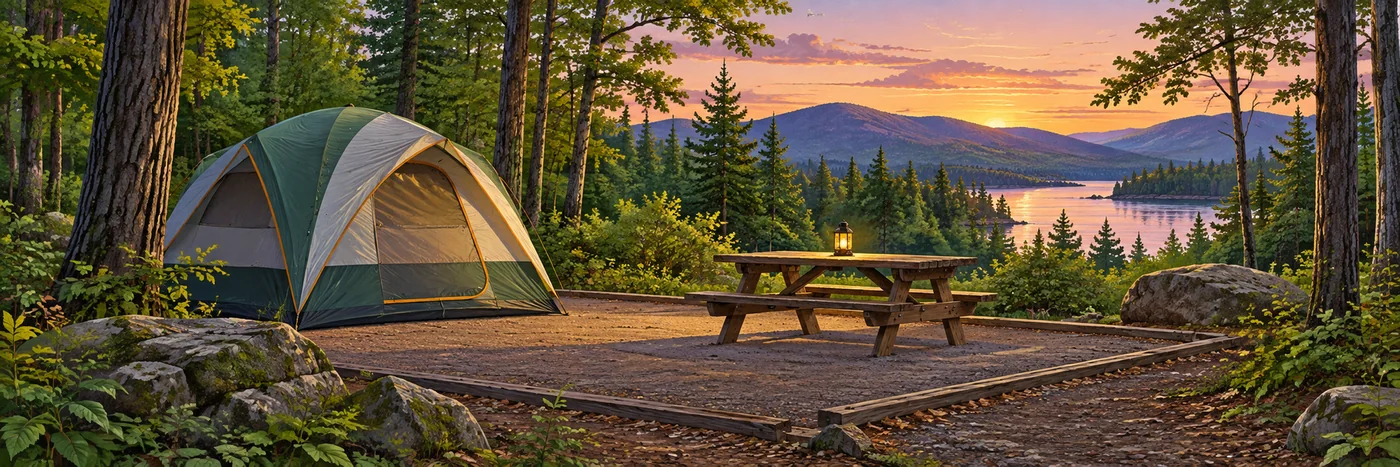
A useful camping list with kids separates what every trip needs from gear that depends on the campsite, weather, and planned activities. Start with shelter, sleep, clothing, food, water, lighting, and hygiene. REI’s family camping checklist is a useful second packing reference. Then check the campground rules before adding equipment for fires, food storage, or recreation.
Use the list below as a planning worksheet, not a universal safety standard. The site’s rules and the current forecast decide what is required.
Core list: bring on most family camping trips
| Category | Pack | Adjust for |
|---|---|---|
| Shelter | Tent, footprint, stakes, mallet, repair kit | Site surface, wind, tent capacity |
| Sleep | Sleeping bags, pads, child sleep comfort item | Night temperatures and bed-sharing rules |
| Clothing | Layers, rain shells, spare socks, sleep clothes | Forecast, season, wet activities |
| Food and water | Meals, snacks, reusable bottles, cooler as needed | Potable water, storage rules, trip length |
| Light and hygiene | Headlamps, spare batteries, wipes, towels, toiletries | Bathroom and shower facilities |
Check every piece of critical equipment before leaving. Pitch the tent once, confirm all poles and stakes are present, test the stove if you plan to use one, and make sure sleeping bags fit the expected conditions. A backyard or local overnight practice run can reveal missing pieces before the real trip.
Gear that depends on the campsite
A drive-up campground with potable water, restrooms, picnic tables, and a fire ring needs different gear from a walk-in or backcountry site. Check what is included and what is prohibited. Confirm the route from the parking area to your site and how far supplies need to be carried. The National Park Service’s camping-safely-before-your-trip guidance and campsite-finding and setup page cover those planning steps.
Food storage is site-specific. Parks can require a bear box, approved container, or another storage method, and rules may apply to food scraps and cooking gear. Fire restrictions also vary with location and conditions. Follow the campground’s current instructions; do not assume that an open fire or camp stove is allowed. The NPS also explains camping safety during a stay.
Add activity gear only when you need it
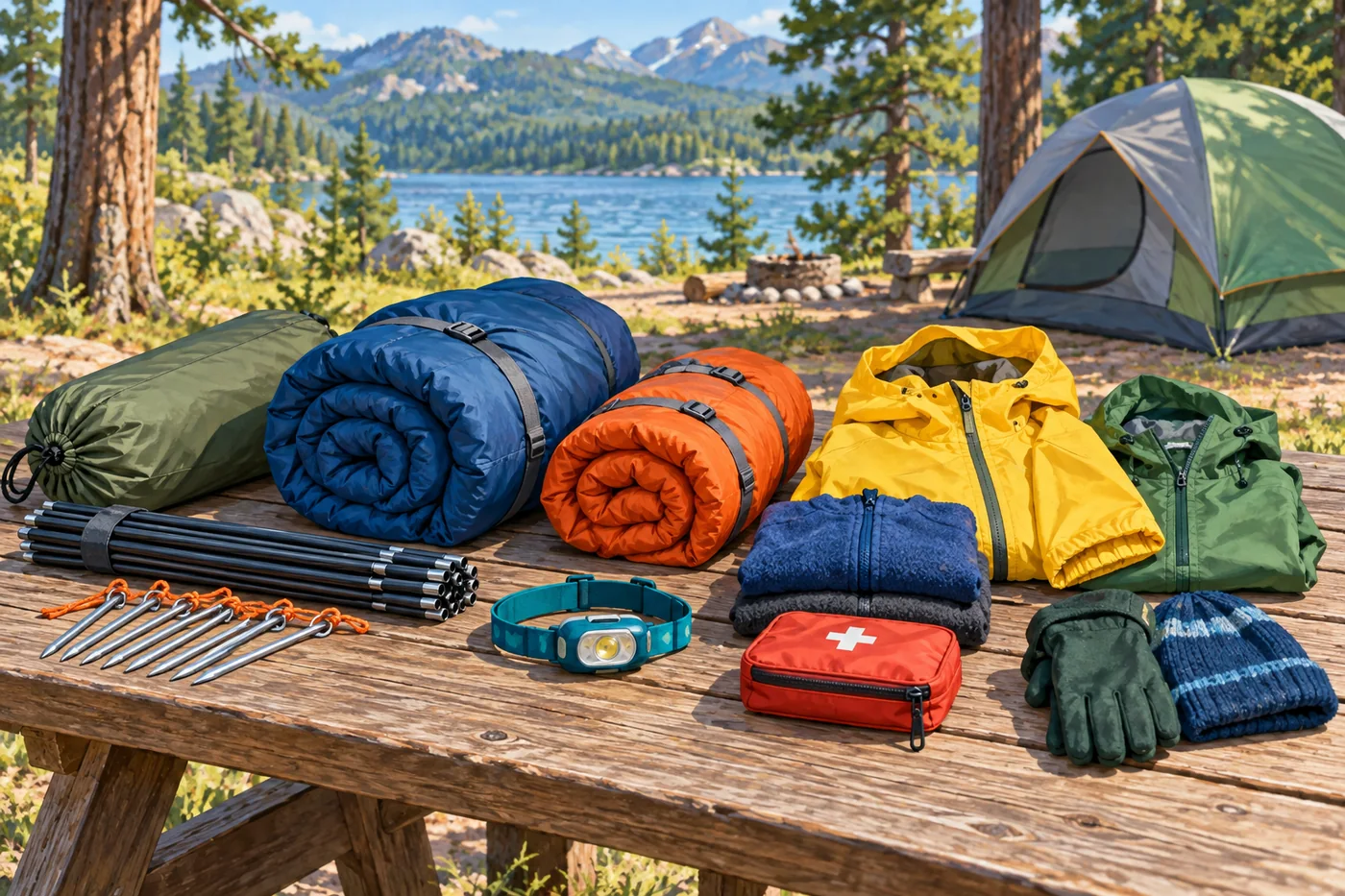
For hiking, add footwear, day packs, sun and rain protection, and the water needed for the route. For swimming, check whether the site permits it, what supervision is required, and whether the shore or current conditions are appropriate for your group. For cycling, paddling, or fishing, add only equipment you know how to use and that follows local rules.
Keep a small first-aid kit and emergency contact details with an adult. Ask a clinician about health-specific supplies or medicine for your child. A general camping checklist cannot decide what is appropriate for an individual medical need.
Make age-based packing easier
Babies and toddlers: plan for more changes of clothing, sleep support that fits the site, feeding supplies, and a way to keep essentials clean and accessible. Follow safe-sleep guidance from the child’s clinician and product makers.
Preschoolers: add a familiar bedtime item, a spare warm layer, and a simple activity for downtime. Keep small items organized so they do not disappear in the tent.
School-age children: give each child a small labeled bag for personal layers, a headlamp, and one comfort or play item. An adult should still carry safety-critical supplies and documents.
Tweens and teens: let them pack some personal gear from a shared list, then check weather and required items together before departure.
Printable camping checklist
The items below are a basic starting point. Add site-specific gear only after reviewing the campground’s current rules.
Optional extras, not automatic essentials
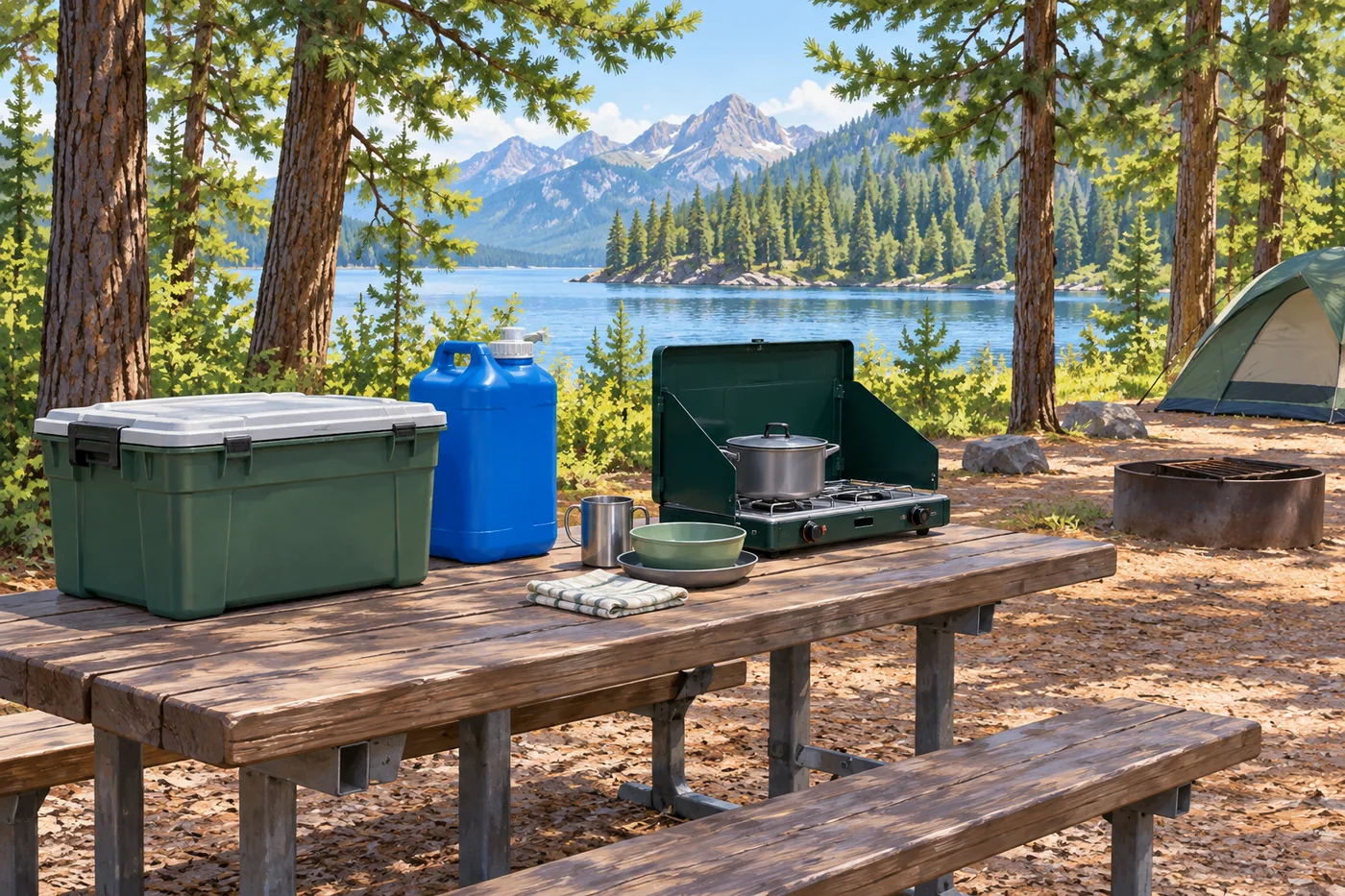
Comfort items, camp chairs, games, binoculars, and extra cooking tools can make a trip easier, but they are not necessary for every family. Before adding an item, ask: does the campsite need it, does it replace something already packed, and can an adult carry and store it safely?
Avoid packing gear just because it appears on a generic list. Fewer, well-tested items make setup and clean-up simpler—especially when the weather changes or children need a rest.
Final checks before loading the car
Read the campground page for check-in, parking, quiet hours, pets, fire rules, food storage, water, toilets, and current closures. Check the forecast for the campsite rather than only the nearest city. Repack food and clothing if the trip length or conditions have changed.
For a car-based trip, use the family road trip guide to organize drive stops and overnight loading.
Frequently asked questions
What do I need to go camping with kids?
Start with shelter, sleep systems, weather-appropriate clothing, food and water, lighting, hygiene supplies, and a first-aid kit. Check the campground’s facilities and rules before deciding which extras are needed.
What should kids wear camping?
Pack layers suited to the forecast and setting, including dry sleep clothes, rain protection, and sturdy footwear for planned activities. Recheck the weather and any site-specific hazards before leaving.
How do you keep food safe at a campsite?
Use the food-storage and disposal method required by that specific campground or park. Rules vary, especially in areas with bears or other wildlife.
What can I leave off a family camping list?
Skip gear that duplicates campground facilities or your family’s existing equipment. Confirm what the site provides and test essential equipment before the trip.