
Things to Do in Chicago with Kids: 2026 Guide by Age
Things to do in Chicago with kids by age and area: the best museums, parks, Navy Pier, costs, strollers, weather, and one-, two-, or three-day plans.
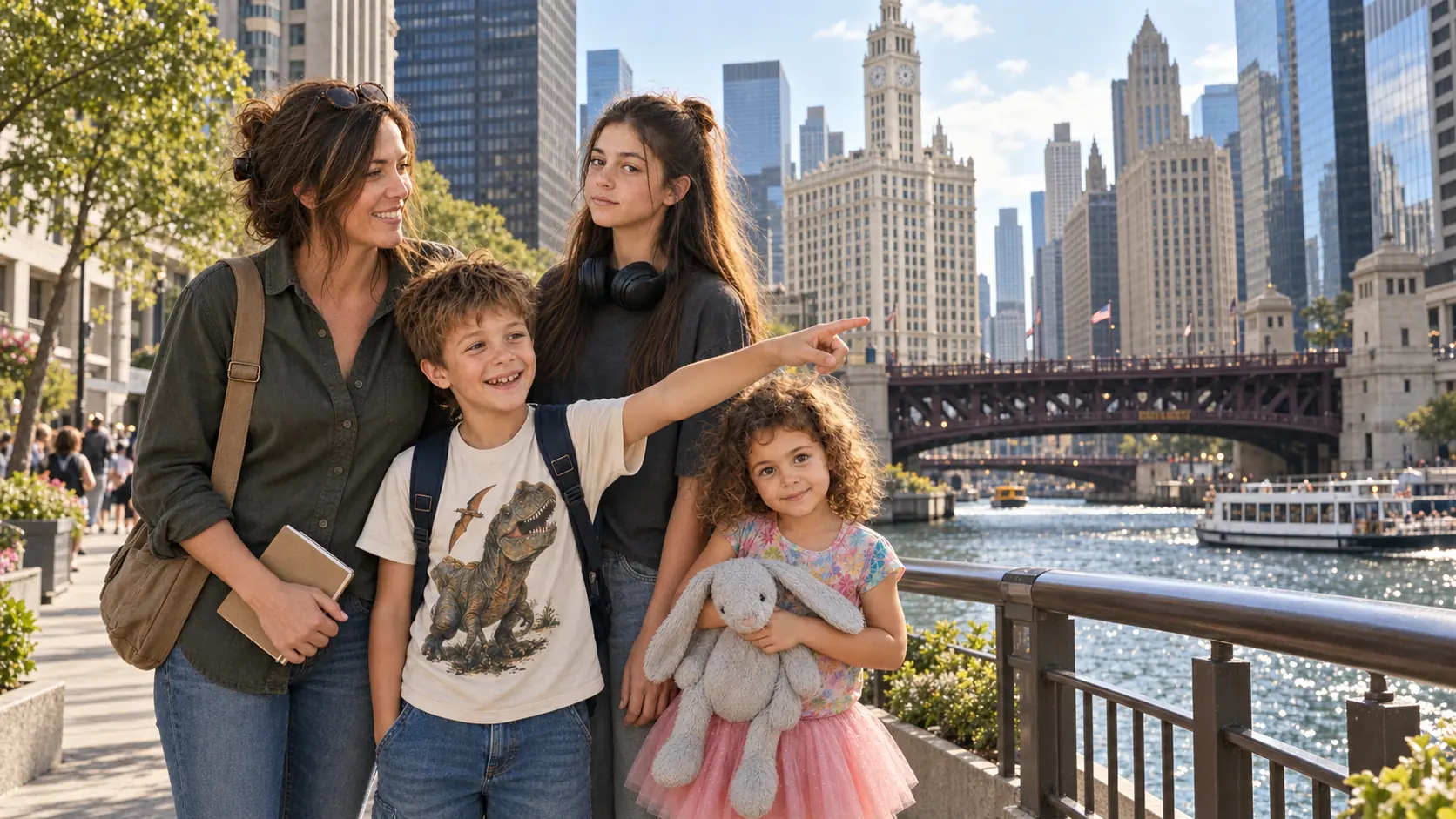
This image was created with AI.
Chicago with kids works best as one major attraction plus one easy reset. Museum Campus, Navy Pier, Millennium Park, and Lincoln Park are separate planning clusters, not one walkable checklist.
For things to do in Chicago with kids, choose by age, weather, and walking tolerance. The official Choose Chicago family guide is useful for the destination map; the decisions below add the practical filter: time, access, cost, and the catch.
At a Glance
| Chicago pick | Best for | Budget tier | The catch |
|---|---|---|---|
| Museum Campus | Ages 4+, cold or rainy days | $100-200 | Long walks and easy-to-overbook timing |
| Maggie Daley Park + Millennium Park | Toddlers through elementary age | Under $100 | Wind, weather, and peak crowds |
| Lincoln Park Zoo | Ages 2-10, budget days | Under $100 | Outdoor walking and weather exposure |
| Navy Pier | Mixed-age families | $100-200 | Rides and tickets can change the budget quickly |
| Architecture river cruise | Ages 7+, tweens, and teens | $100-200 | Schedules and weather are operator-dependent |
| Chicago Children's Museum | Toddlers through about age 8 | $100-200 | A separate paid stop, not an automatic add-on |

This image was created with AI.
Best things to do in Chicago with kids by age
Toddlers and preschoolers
Start with movement and short indoor stretches. Maggie Daley Park, Lincoln Park Zoo, Navy Pier, and the Chicago Children’s Museum give younger children room to reset. Shedd Aquarium can work if the plan is a focused visit, not every gallery. Keep the stroller compact and plan a midday break.
Elementary-age kids
This is the easiest age for Chicago’s big anchors. Shedd, the Field Museum, Griffin Museum of Science and Industry, a lakefront stop, or an architecture cruise can each carry a half-day. Pair only one major museum with a park or meal stop.
Tweens and teens
Older children can handle the city itself: an architecture river cruise, Adler Planetarium, a deeper Field Museum visit, or a museum-and-neighborhood combination. A cruise is weather-dependent, but it adds context without another long indoor gallery.
Best Chicago attractions by area
Museum Campus: Shedd Aquarium
Best for: Ages 4+, animal-focused families. Time: 2.5-4 hours. Cost and booking: Paid, plan-ahead pricing and free admission for children under 2 are listed on the Shedd planning page; admission and schedules change. Access: Elevators, accessible restrooms, seating, and sensory resources are available, but the campus and galleries are large. Food/weather: Strong rainy-day anchor; plan food before or after rather than assuming a quick exit. Catch: It is easy to spend the whole day here.
Museum Campus: Field Museum
Best for: Ages 6+, dinosaur and history interests. Time: 2-4 hours. Cost and booking: Paid admission with current options on the Field Museum guide. Access: Long corridors and a large building reward a route chosen in advance. Food/weather: Reliable cold- or wet-weather choice. Catch: Younger children may get more from a single exhibit than a full museum sweep.
Hyde Park: Griffin Museum of Science and Industry
Best for: Ages 6+, hands-on science. Time: 3-5 hours. Cost and booking: Paid admission and timed options vary; check the official visitor page. Access: Treat it as a dedicated Hyde Park trip. Food/weather: Excellent indoor anchor with food on site. Catch: Its location makes it a poor add-on to a packed downtown day.
The Loop: Millennium Park and Maggie Daley Park
Best for: Toddlers through elementary age. Time: 1-2.5 hours. Cost and booking: Public park time is free; special activities, events, and seasonal rules vary. Access: Good stroller territory, but crowds and lake wind change the experience. Food/weather: Easy to pair with a downtown meal; use a museum backup in rain or extreme cold. Catch: It is a reset, not a full sightseeing day.
Streeterville: Navy Pier and Chicago Children’s Museum
Best for: Mixed ages, especially younger children who need indoor play. Time: 2-4 hours. Cost and booking: Navy Pier public access is free, while rides and attractions are paid. The Children’s Museum is separately ticketed; check Navy Pier for current schedules. Access: Flat and stroller-friendly in principle, but queues and weekend crowds matter. Food/weather: Several food options and indoor pivots. Catch: Paid add-ons can turn a low-cost walk into an expensive afternoon.
Lincoln Park: Lincoln Park Zoo
Best for: Ages 2-10 and budget days. Time: 1.5-3 hours. Cost and booking: The zoo is free; current hours and visitor information are on the official listing. Access: Outdoor paths work with a stroller, but you will walk. Food/weather: Add a neighborhood meal; have an indoor backup in cold rain. Catch: It is not a weather-proof choice.
River North: architecture cruise
Best for: Ages 7+, tweens, and teens. Time: Usually 90 minutes to 2 hours, depending on operator. Cost and booking: Paid, timed departure; reserve after checking the operator’s current route and cancellation policy. Access: Boarding and boat seating vary. Food/weather: Pair with downtown lunch; wind and rain can make the experience uncomfortable. Catch: The schedule is less flexible than a park.
Lakefront: North Avenue Beach
Best for: Warm-weather play and older children who can follow water-safety rules. Time: 1-2 hours. Cost and booking: Beach access is generally free; parking and rentals are separate. Access: Sand is difficult for strollers. Food/weather: Bring water, shade, and a weather exit plan. Catch: Wind, cold water, and changing conditions can end the stop quickly.
Free and low-cost things to do in Chicago with kids
Use Lincoln Park Zoo, Millennium Park, Maggie Daley Park, the Navy Pier promenade, lakefront walking, and neighborhood playgrounds as the free backbone. Admission-free museum days and resident programs are date- and eligibility-dependent, so check the operator before planning around them. A free day still needs food, transit, and weather money.
One-, two-, and three-day Chicago plans
One day: Shedd or the Field Museum in the morning, then one short lakefront or park stop. Choose one paid anchor.
Two days: Day one, Museum Campus. Day two, Millennium Park, Maggie Daley Park, and Navy Pier, or Lincoln Park Zoo if the weather is good.
Three days: Separate the Museum Campus venues, reserve one downtown day for a cruise or Navy Pier, and keep Lincoln Park or Hyde Park as the flexible third day.
Weather, strollers, meals, and booking
Chicago wind can make a mild forecast feel colder on the lakefront. Put outdoor stops in the most stable part of the day and keep one indoor swap. Use the CTA visitor information before relying on a stroller-plus-transit route; the last blocks from a station can matter more than the train ride.
Book timed attractions, cruises, and popular museums after checking the exact date. For trip math, use the Family Trip Budget Planner. Families flying with a nap-sensitive toddler can also use the Nap-Window Flight Planner.
Where to stay with kids
Downtown is convenient for Museum Campus, Millennium Park, and Navy Pier, but a central hotel can mean more walking and higher parking costs. Lincoln Park makes the zoo and neighborhood parks easier. Hyde Park is practical when Griffin Museum of Science and Industry is the trip’s main anchor. Choose the neighborhood that removes your hardest daily transfer. For a wider U.S. shortlist, compare best family vacations in the U.S. and kid-friendly weekend getaways before booking.
FAQ: Chicago with kids
Is Chicago stroller-friendly?
Yes for parks, Navy Pier, the lakefront, and neighborhood walks. Museums add elevators, security, long corridors, and crowds. A compact stroller plus carrier is the flexible combination.
Should families stay downtown?
Stay downtown for a short first visit centered on Museum Campus and the Loop. Choose Lincoln Park when outdoor time and the zoo matter more than being close to the lakefront museums.
What should families skip?
Skip the three-museum day. For younger children, one major indoor attraction plus one park is usually a better use of the day than collecting admission tickets.
Is Chicago good in winter?
Yes, if the itinerary is indoor-first. Cold and wind make exposed lakefront time less reliable, so reserve parks for short resets and keep museum hours and transit changes current.
Conclusion
The best Chicago family itinerary is curated, not crowded: one anchor, one easy reset, and a backup for weather. Start with the neighborhood you will already be in, then match the attraction to the child who will set the pace.