
On this page
A family farm stay can mean a working farm inn with meals and optional chores, a self-catering cottage with scheduled animal activities, or a quiet guest house on farm land. Choose by the exact unit, your child’s routines, the property’s supervision and animal-access rules, and what the stay actually includes—not by the “family-friendly” label alone.
What is a family farm stay, and how is it different from a farm visit?
A farm stay includes overnight lodging on or near a working or guest farm; a farm visit is usually a day activity. The overnight booking may include meals or scheduled activities, but it does not automatically include animal contact, chores or access to every part of the property.
Listings use “farm stay” for different experiences. One property may offer an inn room, shared meals and scheduled chores; another may rent a cottage with a kitchen and optional activities; a third may provide a rural place to stay without a farm program. Before you book, look for a description of the exact room, activity schedule, age rules and areas guests can enter.
That distinction also helps compare a farm vacation with camping or a countryside rental. Our camping checklist for families covers the gear and campsite setup involved in an outdoor stay, while a farm lodging booking may supply the room but still require planning for meals, muddy paths and rural driving.
Which U.S. farm stays offer different experiences for families?
These five properties illustrate different lodging and activity patterns rather than a ranked list. Their published details were checked on October 26, 2026; confirm the current unit, dates, child rules and inclusions directly before booking.
Oregon · optional farm activities
Leaping Lamb Farm
The farm describes a farmhouse that sleeps up to 12 and a cottage for up to four. Guests may join activities such as feedings, egg collection and chores, making it an option for families who want to ask about participating rather than assume every activity is part of the stay.
Check: the property lists a two-night minimum with date exceptions; confirm the exact room, schedule and current minimum on the farm-stay details page.
Vermont · inn and meals
Liberty Hill Farm & Inn
This family-run inn describes meals and family-friendly farm chores as part of its stay. That may suit families who prefer an inn routine over cooking every meal, provided shared bathrooms and the property’s schedule work for their group.
Check: the inn lists shared bathrooms and a two-night minimum; verify the room, meal plan and current stay rules on its inn information page.
Tennessee · apartment with kitchen
Little Tail Farms
The farm’s apartment listing says it sleeps up to six and has a full kitchen; the apartment is above a detached garage, so stairs matter. The property’s cottage comparison has a separate age rule, which should not be assumed to apply to the apartment.
Check: ask about your children’s ages and the exact unit, stairs and activities using the apartment details and property’s accommodation comparison.
California · cottage and coastal base
Mar Vista Farm + Cottages
The property describes cottages with kitchens, farm animals and egg collection, with coastal access nearby. Activities and animal viewing are governed by its guest rules; guests should remain outside animal enclosures and follow instructions about feeding.
Check: confirm which seasonal activities are available and read the current guest guidebook alongside the cottage information.
Pennsylvania · quieter farm base
Landis Farm Guest House
The guest house is described as sleeping up to six, with two bedrooms plus additional sleeping space in the living area. The working farm raises Jersey cows, but a farm setting alone does not promise scheduled animal contact or chores.
Check: confirm the layout, sleeping arrangements, farm access and any activities on the guest-house information page.
For a broader set of trip styles and regions, compare these examples with our guide to family vacations across the United States. Treat the farm examples as starting points for your own fit checks, not as an exhaustive directory or an endorsement based on a personal visit.
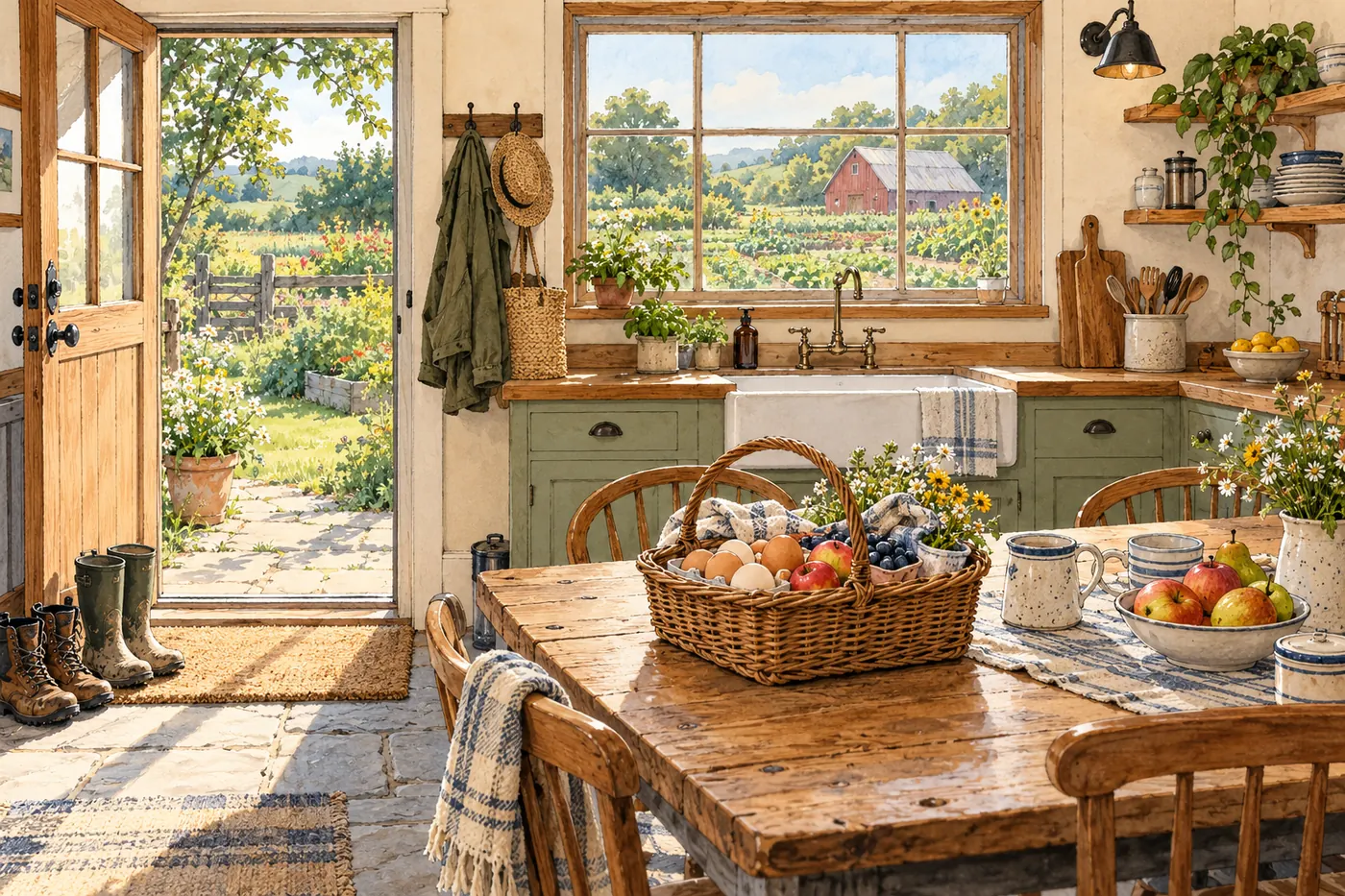
Lodging style changes the day as much as the farm activities do. A kitchen can help families manage snacks and early breakfasts; an inn meal plan may reduce cooking but follow set serving times. Check the bathroom arrangement, sleeping spaces, stairs and distance to the parking area against your child’s routines.
Which farm stay could suit toddlers, school-age kids or teens?
There is no single best age for a farm stay. Match the exact accommodation, bathroom and sleep setup, activity schedule and animal rules to your child’s routines and comfort rather than relying on a broad age label.
For toddlers and preschoolers, ask how far the room is from bathrooms, meal areas and handwashing; whether there are stairs or unfenced areas; and whether children can watch animals without entering enclosures. For school-age children, find out whether chores or feeding activities are optional, scheduled and supervised. Teens may prefer more independence or nearby activities, but they still need clear property boundaries and transport plans.
Check age policies for the exact room type. A rule listed for a property’s cottage may not apply to its apartment, inn rooms or another accommodation. Ask the host to confirm the age policy for your selected unit in writing, especially if the property includes several lodging types.
What should families include in the full farm-stay cost?
Compare the final price for your dates and party, then add meals, transport and any activities that are not included. A room-based quote, minimum-night rule or meal plan can change the total more than the farm experience label suggests.
Before booking, check whether the quote is per room or per person, the minimum stay, taxes and fees, meal inclusions, kitchen access, cancellation terms and any separately charged activities. Add groceries or restaurant meals, rural car costs, parking, and an overnight stop if the farm is far from your route. Do not compare a self-catering cottage with a meal-included inn using the nightly rate alone.
Our family trip budget planner can help separate lodging, food, transport and activity costs; the vacation-planning guide lays out a practical order for comparing dates, bookings and backup options.
How can parents plan animal time and handwashing?
Follow the farm’s own rules, supervise children closely, keep food and drinks out of animal areas and wash hands after contact or leaving those areas. CDC guidance for animal exhibits also says children under five should not touch reptiles, amphibians or poultry.
Farm animals and their surroundings can carry germs even when the space looks clean. Set expectations before an activity: stay with the supervising adult, do not enter a pen unless staff invite guests, and do not feed or touch animals unless the property permits it. Know where soap and running water are available before a visit, and wash hands before eating.
The CDC’s animal-exhibit hygiene and supervision guidance provides more detail for families. A farm’s own instructions may be stricter or specific to its animals, so follow those rules as well.
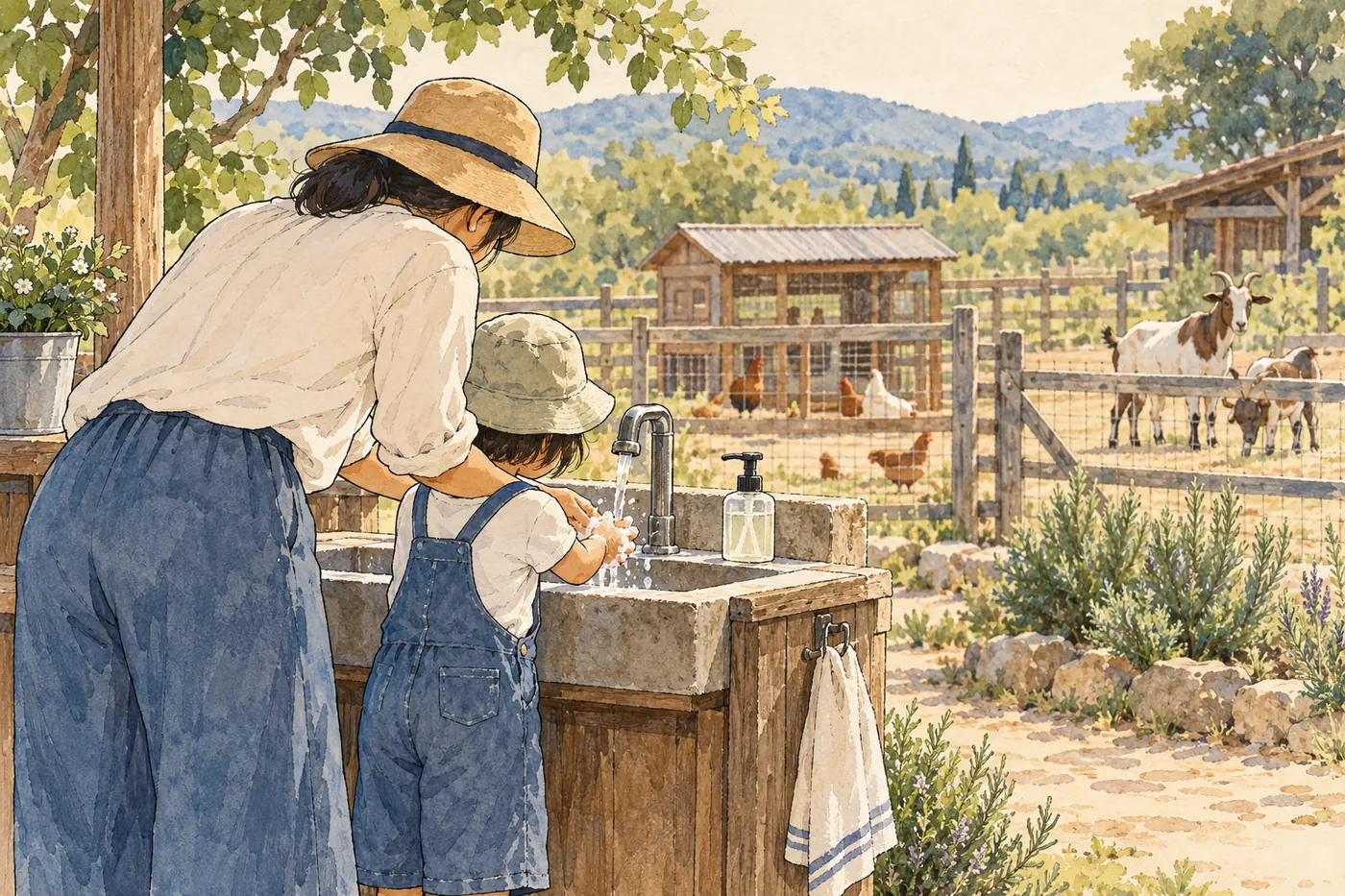
If a child is uncomfortable around animals, a farm stay can still be about the countryside, garden, room and nearby activities. Ask whether the lodging can be enjoyed without joining animal activities and whether guests can keep a comfortable distance from the working areas.
Which season, location and access details can change the trip?
Farm stays are rural by design, so distance, terrain, weather and schedules can shape the day. Confirm how guests reach the property, what is open during your dates and whether paths, stairs or animal areas fit your family.
Ask about the drive from the nearest town, grocery access, parking, arrival hours, road conditions and mobile coverage if you rely on it. Rain can affect muddy paths and outdoor activities; heat or cold can change how long children want to be outside. Check whether the property has indoor space and whether seasonal farm tasks are actually scheduled during your stay.
For access, ask about stairs, slopes, gravel, lighting, bathroom location and where a stroller can go. A property may be family-friendly while still having paths or buildings that are difficult for a particular stroller, mobility aid or young child. Get details for the part of the property you expect to use.
What should parents ask before booking a farm stay with kids?
Ask about the exact unit and your children’s ages first, then confirm animal access, handwashing, meals, schedule and arrival logistics. A short written checklist can expose a mismatch before you pay or set the rest of the trip around the stay.
- Which exact lodging unit are we booking, and how many people can sleep there comfortably?
- Are there age rules for this unit or any scheduled activity?
- What animal contact is allowed, when, and under whose supervision?
- Where can children wash hands, and where are food and drinks allowed?
- What meals, kitchen equipment, bathrooms, stairs and sleeping spaces are included?
- Which activities operate on our dates, and what changes with weather or season?
- How far are parking, groceries and the nearest town, and what are the cancellation terms?
If the property is listed in a directory, verify those answers with the host rather than treating the directory as confirmation. The Farm Stay U.S. directory can help discover places by area, but its listing is a starting point for checking each property’s own information.
Is a farm stay a good fit for your family?
A farm stay can work well when your child’s routines fit the real lodging and the family is comfortable with the property’s rules and rural setting. If your plan depends on an age-specific activity, a particular meal, accessible paths or a quiet sleep setup, confirm that detail for the exact unit and dates before you book.
The best choice may be an inn with meals, a cottage with a kitchen or a simple guest house near farmland. Decide what matters most—overnight comfort, optional chores, time outdoors or a base for nearby places—then compare the actual inclusions and caveats. For the wider booking sequence, use our family vacation planning guide to set dates, budget and a fallback before paying.
What age is best for a farm stay?
There is no single best age. Match the exact lodging, bathroom and sleep setup, activity schedule and animal rules to your child’s routines and comfort; ask the property about age limits for the specific unit.
Are children allowed to help with farm chores?
Some properties offer optional or scheduled chores, while others provide lodging without hands-on farm activities. Confirm which activities are available on your dates, the age rules and whether participation is supervised.
Do farm stays include meals?
It depends on the property and room type. Some farm inns describe meals as part of a stay, while cottages and guest houses may have a kitchen or require families to bring or buy food; confirm inclusions for the exact booking.
How do you keep kids safe around farm animals?
Follow the farm’s rules, supervise children closely, keep food and drinks out of animal areas and wash hands after contact or leaving those areas. CDC also advises that children under five should not touch reptiles, amphibians or poultry at animal exhibits.
Are farm stays different from petting farms?
Yes. A farm stay includes overnight lodging, while a petting farm or farm visit is usually a day activity; an overnight property may offer no animal contact, or only limited scheduled activities. Check the listing and ask what is actually included.
Useful planning tools

Frequently asked questions
What age is best for a farm stay?
There is no single best age. Match the exact lodging, bathroom and sleep setup, activity schedule and animal rules to your child’s routines and comfort; ask the property about age limits for the specific unit.
Are children allowed to help with farm chores?
Some properties offer optional or scheduled chores, while others provide lodging without hands-on farm activities. Confirm which activities are available on your dates, the age rules and whether participation is supervised.
Do farm stays include meals?
It depends on the property and room type. Some farm inns describe meals as part of a stay, while cottages and guest houses may have a kitchen or require families to bring or buy food; confirm inclusions for the exact booking.
How do you keep kids safe around farm animals?
Follow the farm’s rules, supervise children closely, keep food and drinks out of animal areas and wash hands after contact or leaving those areas. CDC also advises that children under five should not touch reptiles, amphibians or poultry at animal exhibits.
Are farm stays different from petting farms?
Yes. A farm stay includes overnight lodging, while a petting farm or farm visit is usually a day activity; an overnight property may offer no animal contact, or only limited scheduled activities. Check the listing and ask what is actually included.
Related articles
View all
How to Plan a Family Vacation: Budget, Booking Order, and Backups
A neutral family vacation planning canvas for choosing a trip, setting a realistic budget, booking in order, and keeping backup options.
Read story
Camping List with Kids: Essentials, Weather Gear, and Extras
A printable camping list that separates trip essentials, campground-dependent gear, and optional extras for different ages and weather.
Read story